Behaviour · Field notes
The First One Pays
At the edge of the ice, the animal that jumps first absorbs the cost of the information everyone else uses.
Scroll
At the edge of the ice, the animal that jumps first absorbs the cost of the information everyone else uses.
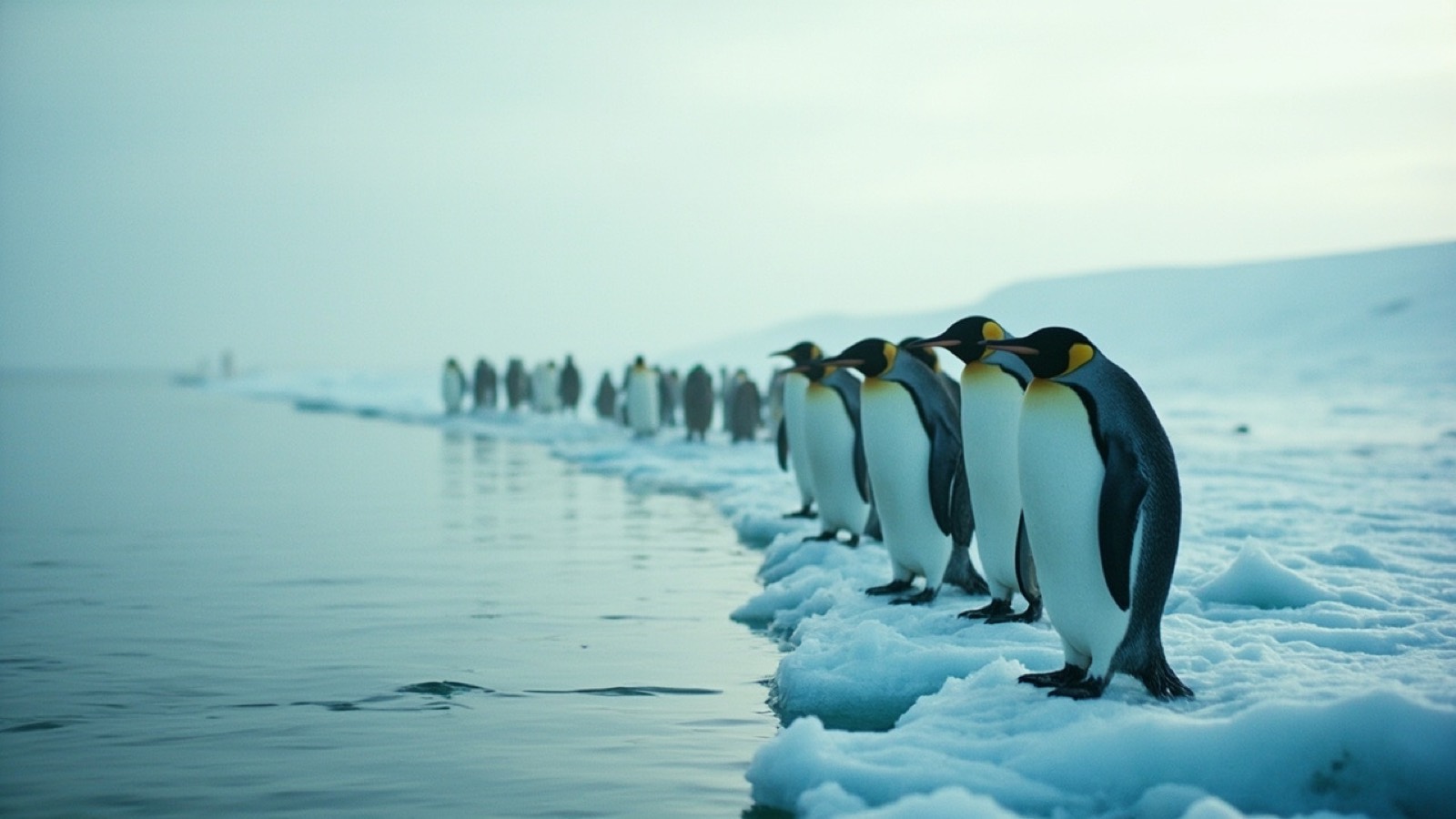
Somewhere under every sheet of Antarctic sea ice there is a leopard seal, and it is not hungry. The colonies come up onto the floe at the end of the foraging day, and they stand at the lip of it, and they wait. Not because they cannot tell that the water is cold. Because they know something is in it that they would rather not meet alone.
What happens next is one of the most studied decisions in animal behaviour, and it looks, from a distance, exactly like cowardice. A line of penguins facing open water. A long pause. Then one of them goes in, and the rest follow within seconds, as though a switch were thrown.
That switch is the whole story. The pause is not indecision. It is a group solving a problem where the solution is expensive for exactly one member and free for everyone else.
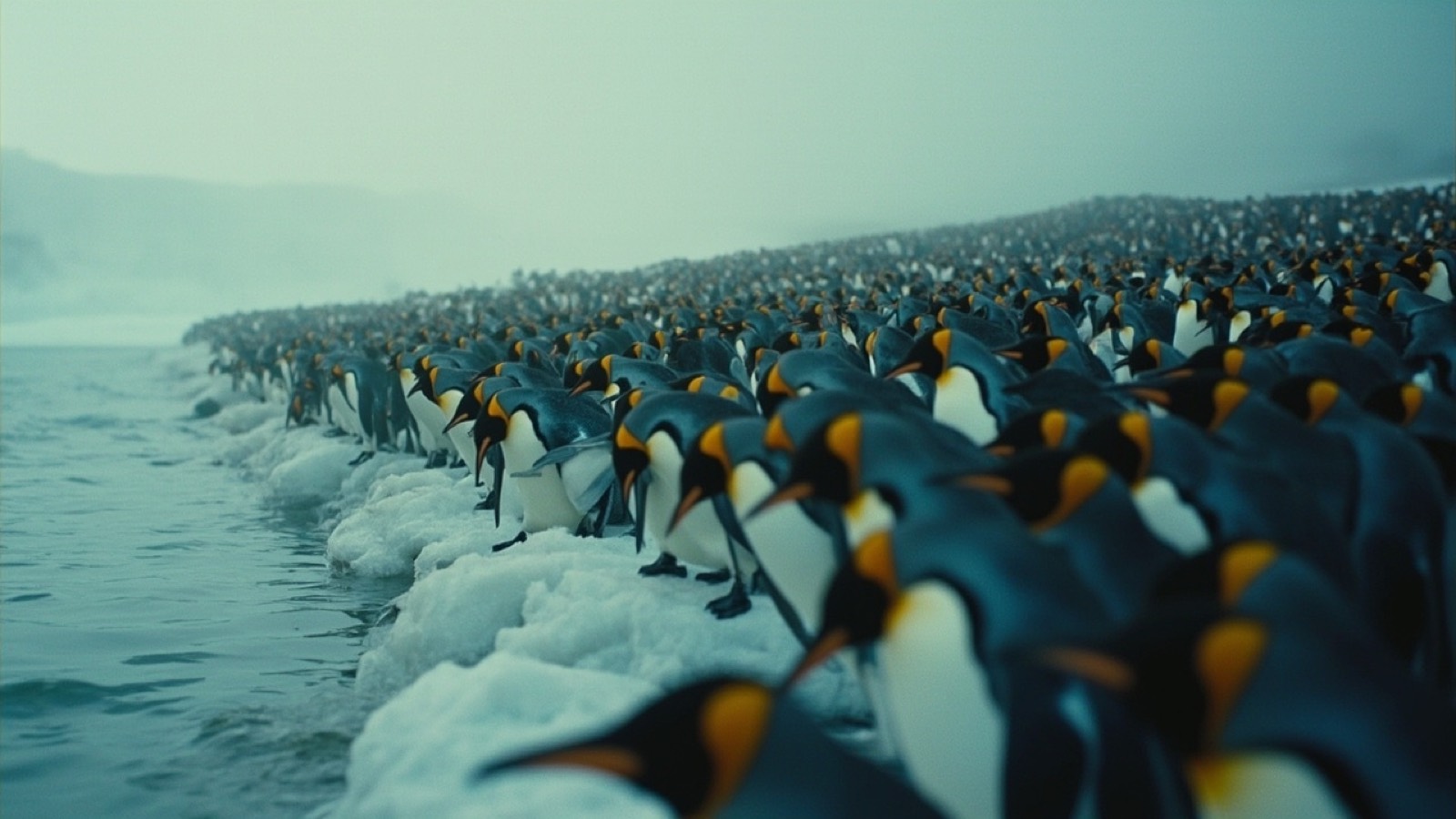
The pause has a name and a description. Penguins at an edge go into water-searching: a forward-leaning posture, neck extended toward the water, the flippers held clear of the body. They are not hesitating in the vague sense. They are inspecting.
They are trying to see what they can. The problem is that the useful information is not visible. A leopard seal below the ice surface leaves no ripple, no disturbance, nothing the eye can catch from above.
When the water gives nothing, the colony becomes the sensor. A bird that enters and returns unharmed is a live report. A bird that does not come back up is a report too, though a slower one.
This is why the mass entry looks so sudden. It isn't one bird overcoming fear and the rest following. It is dozens of birds converging on the same piece of evidence at the same moment, and then acting on it simultaneously.
There is no leader in this. No bird is assigned to test the water. The first jumper is not volunteering out of generosity, and the ones behind are not free-riding through fear. They are both responding to a structure in which the cost of being wrong falls entirely on whoever moves first.
That is a hard problem with an unfair shape, and the colony solves it the only way a hard problem with an unfair shape can be solved: by making sure the cost is small and the information is shared.
Leopard seals are the reason any of this matters. They are among the few predators that hunt in water and at the boundary, and a colony at a floe edge is exactly where they wait. The predation risk is not spread evenly across the colony's day. It is concentrated, almost entirely, in the seconds around entry.
Which means the entire danger of the foraging day is decided in a narrow window, and it is decided by a coin-flip among animals that are all roughly equivalent in their ability to survive the water. Nothing about the first bird makes it better suited to be the test. It is a pure ordering problem, and whoever draws the short straw draws it.
This is the part the popular telling usually misses. The penguins at the edge are not failing to act out of fear. They are correctly pricing a situation in which acting first and acting safely are mutually exclusive, and they are minimising the total cost across the group by making sure the cost lands somewhere.
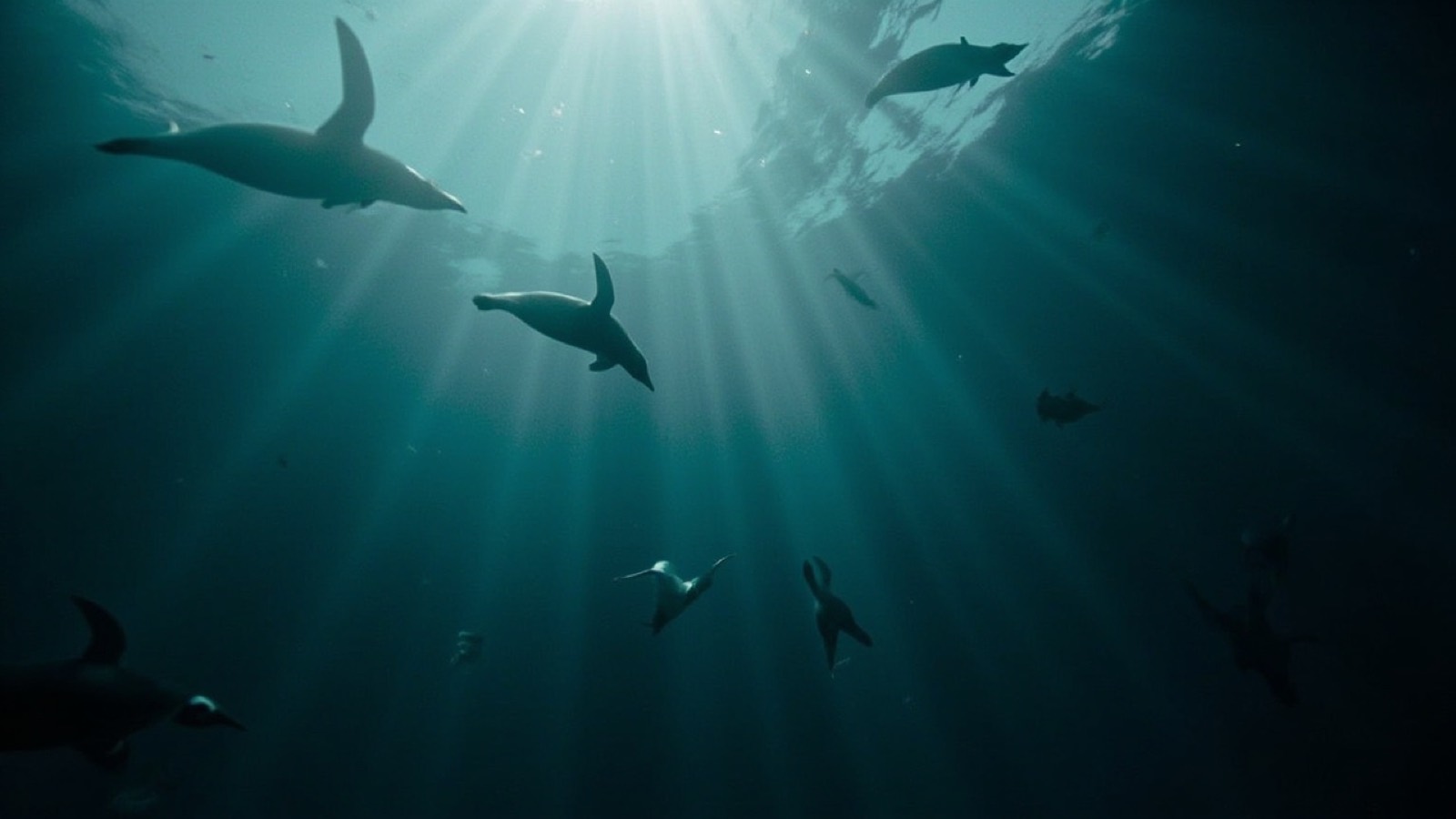
How long the pause lasts is itself a measurement. A colony that has been standing for a while has been getting reports: birds going in, birds coming back, the general rate of successful returns. When the rate looks bad, the pause lengthens. When it looks good, the gap between hesitation and entry collapses.
Nobody in the colony is reading a signal. Each bird is reading the behaviour of other birds, and each of those birds is doing the same. Information propagates through a crowd rather than a leader.
By the time a bird enters, it is not acting on its own observation of the water. It is acting on the accumulated observation of the colony, compressed into a single visible event: someone is in the water and has not been eaten yet.
That event is an extraordinarily efficient piece of communication, because it is impossible to fake and impossible to miss. It costs one bird a little risk and gives the rest of the colony the entire evening's intelligence.
A strategy that depends on somebody going first has an obvious failure mode, and it is worth naming rather than tidying away. If the first bird does not come back, the pause resets. The colony waits again, and the risk is offered up to whoever is nearest the lip.
There is no arrangement here that makes everyone safe. The system works by concentrating a small, real danger in one place and one moment, and then getting out of the way of it. It is not elegant. It is what works.
It is tempting to read the hesitation as fear, and the entry as courage. Both readings flatten it. The bird that goes first is not braver than the bird that waits. It is the one holding a position nobody wants to hold, in a situation where holding it is genuinely valuable and genuinely unfair.
What the colony has built is a way of moving a cost through a crowd without anyone having to agree on who should bear it. One bird takes the risk. Everybody gets the knowledge. The next morning the arrangement is identical, and a different bird stands closest to the edge, without anyone having decided that it should be that one.
It is an unglamorous solution to an impossible problem, which is usually what the unglamorous solutions are. The colonies have been doing it for longer than there have been observers, and it has never once required a leader, a plan, or a version of courage that would photograph well.